Let There Be Light—Reflections on Ireland in the Context of Lug-Lugnashed
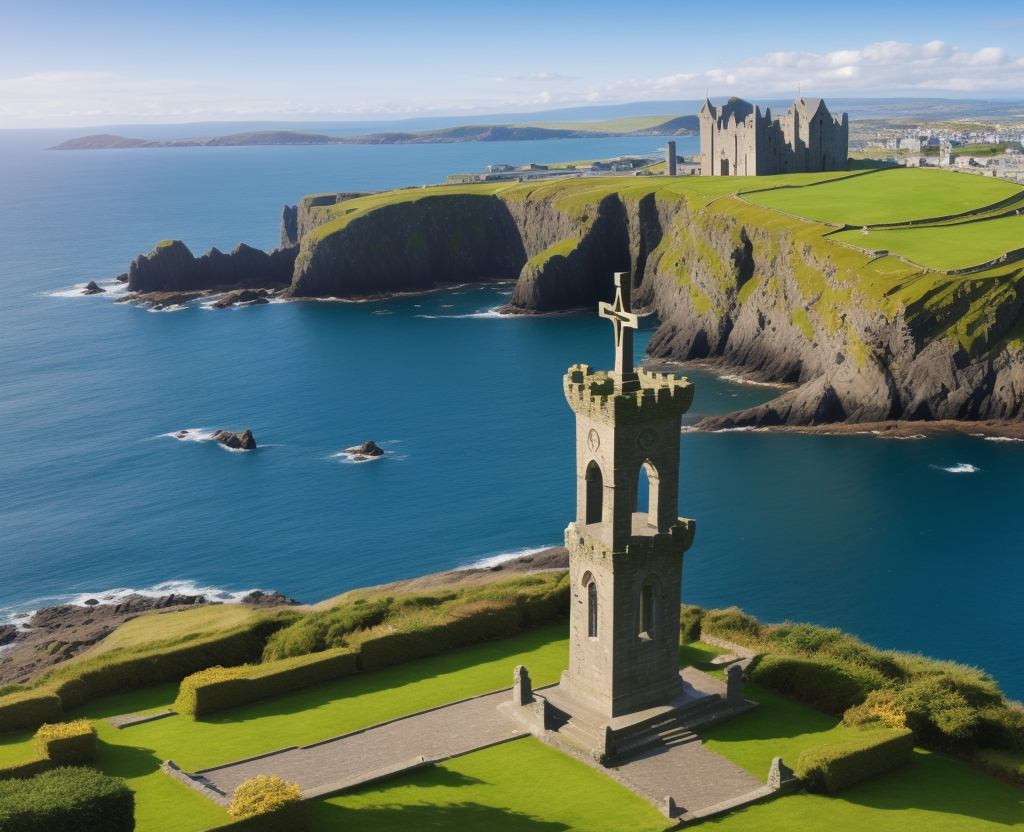
There is unrest not only in Ireland, but in many European nations whose founding was once based on mythical traditions: France, Germany, Great Britain, Ireland… The intuitive resistance to the Moloch-like system—fueled by spiritual safety mechanisms—is growing steadily, for this system, which can only be called diabolical, reveals with each passing day that it seeks to uproot the spiritual and mythical foundations that give a country its stability—it must do so for the sake of its own existence— for it is from these that the fire-striking sparks arise again and again, sparks that are more than just an obstacle to the growth of the Moloch-like system.
But the spark is still too small to kindle the purifying fire that would consume the Moloch-like system, and the myths constantly remind us which of the driving and supporting forces must be activated in order to bring about a transformation in accordance with spiritual laws.
The Case of Ireland
The cultural and spiritual influence of the Celts on both the Irish and Northern European worlds remains unmistakable to this day and can be seen in the ritual sites, menhirs, and dolmen burial sites that still exist.
The sparse written sources from ancient times—most of which were destroyed by Christian scholars—have left us with a picture of Celtic ways of life, thought, and action that can certainly be further elaborated upon.
The menhir and dolmen culture can primarily be traced back to the druids’ knowledge of places of power (ritual sites). Many of these sites were appropriated by Christians as building sites for churches, cathedrals, and chapels, for even without direct Celtic influence, they were regarded by many spiritually oriented people as places of spiritual and mental consecration or as gathering places and sites for inner purification and refuge.
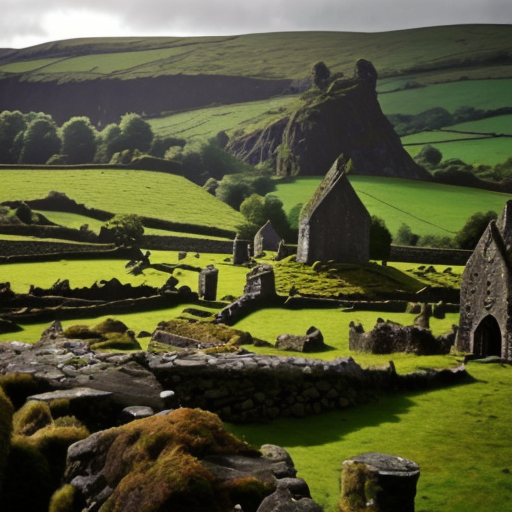
Many of these sites were taken over by Christians as building sites for churches, cathedrals, and chapels…
Lug (Lugnashed) — A Mythological Reflection
A few weeks ago, on August 1, Irish people with a (still) mythological orientation celebrated Lugnashed, a commemoration and tribute to the Celtic god of light and goodness. In the aforementioned context, Lugnashed should be understood as a modified, modern-day description whose actual mythological background is more complex than simply the description of a god of goodness and light.
Lug is well-documented in the mythological history of Ireland; that is, the legends are extensive and cannot be presented in their entirety in this blog post.
Lug’s mythological cycle is not limited to August 1, but once dominated—though today only to a limited extent—the major Irish festivals: On May 1 (the Celtic Beltane), the Irish celebrated the arrival of Lug and the Tùatha Dê Danann with a bonfire, which was also lit to drive away the evil dragons that were harming the land. This was followed by the summer festival on August 1, which took place in honor of Lug’s tutor (Tàltiu) as well as in remembrance of the battles Lug waged against dragons and snakes—a celebration expressed by the revelers through chariot and horse races, competitions, and games, among other activities. On November 1, the anniversary of Lug’s death, the Irish people offered conciliatory sacrifices to the weather dragon that had slain Lug (which had often inflicted severe, bleeding wounds on him).
The Irish Summer Festival (August 1) was a spectacle honoring Lugh’s teacher (Tàltiun), but it also symbolized Lugh’s battles against the dragons that were ravaging the land.
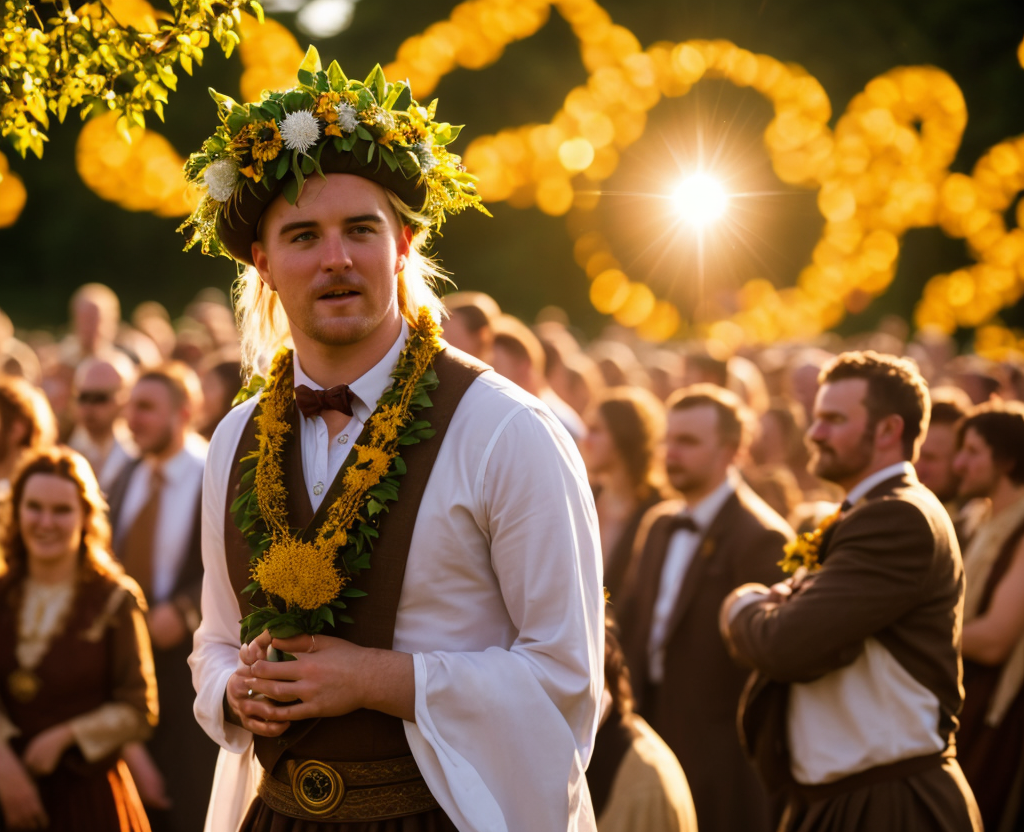
Lug, standing at the head of the ancient Irish royal line, also led the kings of the Tùatha Dê Danann—“the peoples of God, whose mother is Dana”—who are said to have once conquered Ireland. The Tùatha originated in the mythical-spiritual realm, and their most important characteristic was that they were helpful and friendly spirits to humans.
Ireland—A Spiritual Interpretation
Ireland is currently far removed from the traditions that once shaped the country. The violent imposition of Christianity—here as elsewhere—transformed traditional mythical rites, beings, places, and festivals into interpretations, practices, ways of life, and legal codes subservient to Christianity.
And it seems as though the ongoing appeasement of the weather dragon that slays Lug (an expression of acceptance of the subjugation of ancient mythical Ireland) on November 1 has robbed the Irish people of the power to neutralize the dragon’s energy.
According to Whitley Stokes, the name Lug means “warrior,” though in the context of the Old Irish language, it more accurately means “lightning” or “fire.” These definitions, along with the fact that Lug was a king who bridged the human and spiritual worlds, form the basis for his inclusion in our spiritual interpretation.
Lug is to be understood as a mediator between the world of Celtic mythology and the people—who were more or less involved in rituals—and who was aware that he had to provide stability and guidance to the Irish, who were wavering in their mythological beliefs and practices; in other words, he was a true bridge-builder between the ancient pre-Christian gods and the people. His spiritually guided struggle against the Tùatha Dê Danann and the mythical creatures—which express primal human instincts—that threatened the Irish people (the dragon and the serpent) is thus logical and consistent: The dynamic energies of dragon and serpent beings have accompanied the Nordic-influenced people since the beginning of their earthly existence; in Asian mythology, the dragon plays a decidedly positive role.
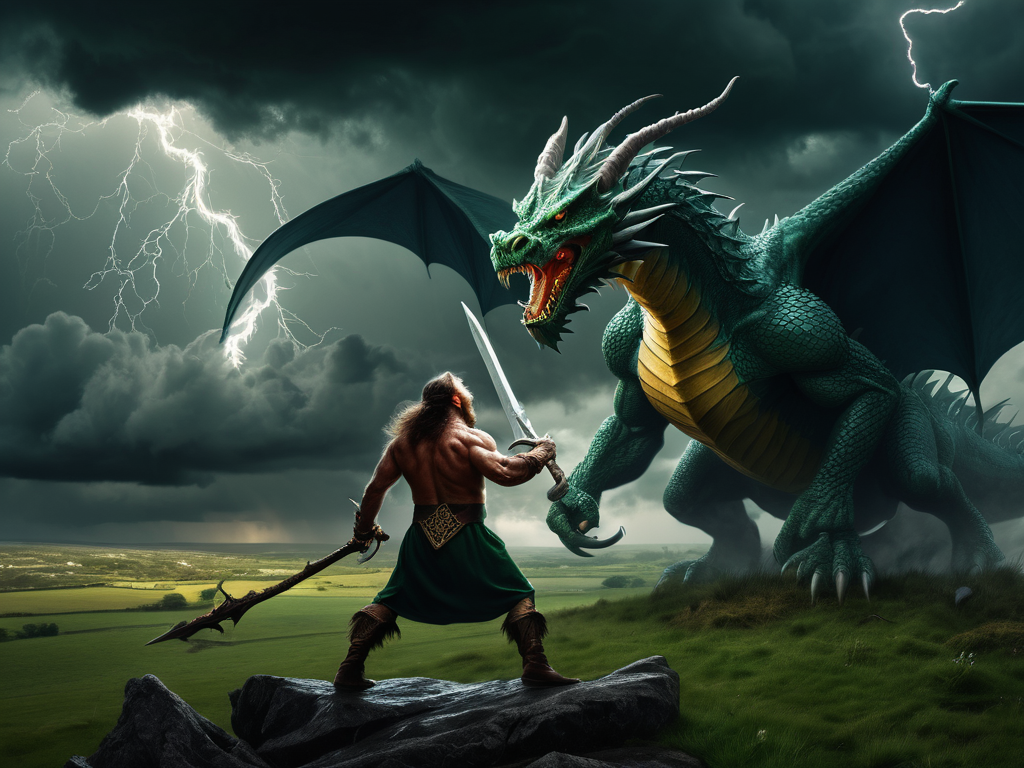
Lug’s battle against the Tuatha Dé Danann and the mythical creatures—which embody primal human instincts—that threaten the Irish people (the dragon and the serpent) is thus logical and consistent…
As soon as Lug (Siegfried, for example, in Germanic mythology), as king and hero, takes up the fight against primal human instincts—embodied in the nature of the dragon, the serpent, or the demons—in order to neutralize these negative energy fields for the good and spiritual development of the people, he freed the majority of the Irish people from their negative impulses. The task of the people was now to rebuild and realign the aspects of the loss of spiritual principles—symbolically represented by the battle—in order to integrate them purposefully into daily life.
The dramatic nature of Lug’s death at the hands of the weather dragon signifies that the primal forces had grown so powerful due to humanity’s spiritual misconduct that they could no longer be restrained. The arrival of Christianity in Ireland serves as an example: it accelerated the decline of ancient Irish traditions and ways of life to such an extent that hardly any traditional and spiritual values remained among the once-proud and myth-steeped Irish people.
Outlook
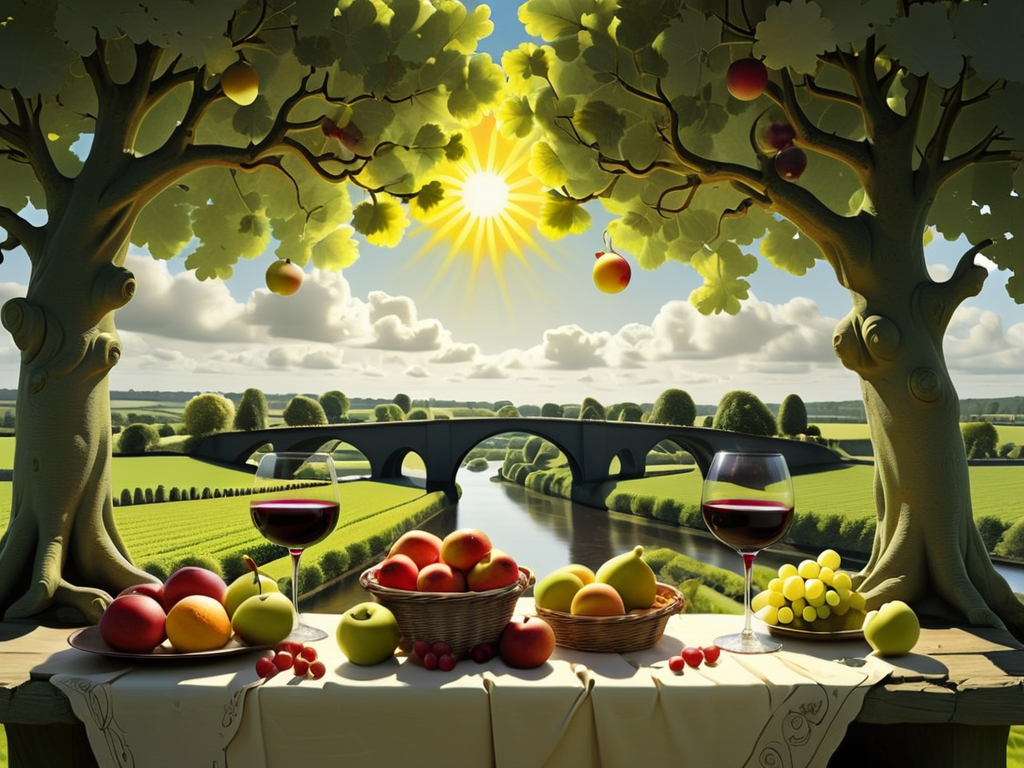
Irish mythology itself describes what Ireland might be like after the elimination or massive containment of the dragon and serpent energies (the modern Moloch-like system), as expressed through one of Europe’s most significant cultural sites, the “Palace of the Boyne” (the mythological home of the gods!): Ireland will once again become the place where fruit grows eternally on trees; two pigs—one alive, the other roasted for consumption—renew themselves after each meal; a jug filled with the beer of immortality refills itself again and again…
Ireland is once again becoming the place where fruit grows back on trees forever…
In light of the power of the Moloch-like system, this seemingly utopian prospect appears to be nothing more than the daydreaming of unstable contemporaries, especially since modern people have been taught that ancient myths are based on pure fantasy, historical misinterpretations, or delusions. Conversely, there are no limits to the media’s portrayal of the Molochian fantasy world—for example, when it comes to spreading and promoting its ideology and the spirituality recognized only by mass religions.
Yet the world as we currently experience it is undergoing an intensifying transformation that seeks to free spiritual humanity from the clutches of the dystopian Moloch-like system, but which requires the support of the awakened.