Halloween – Samhain or the “Memento Mori”
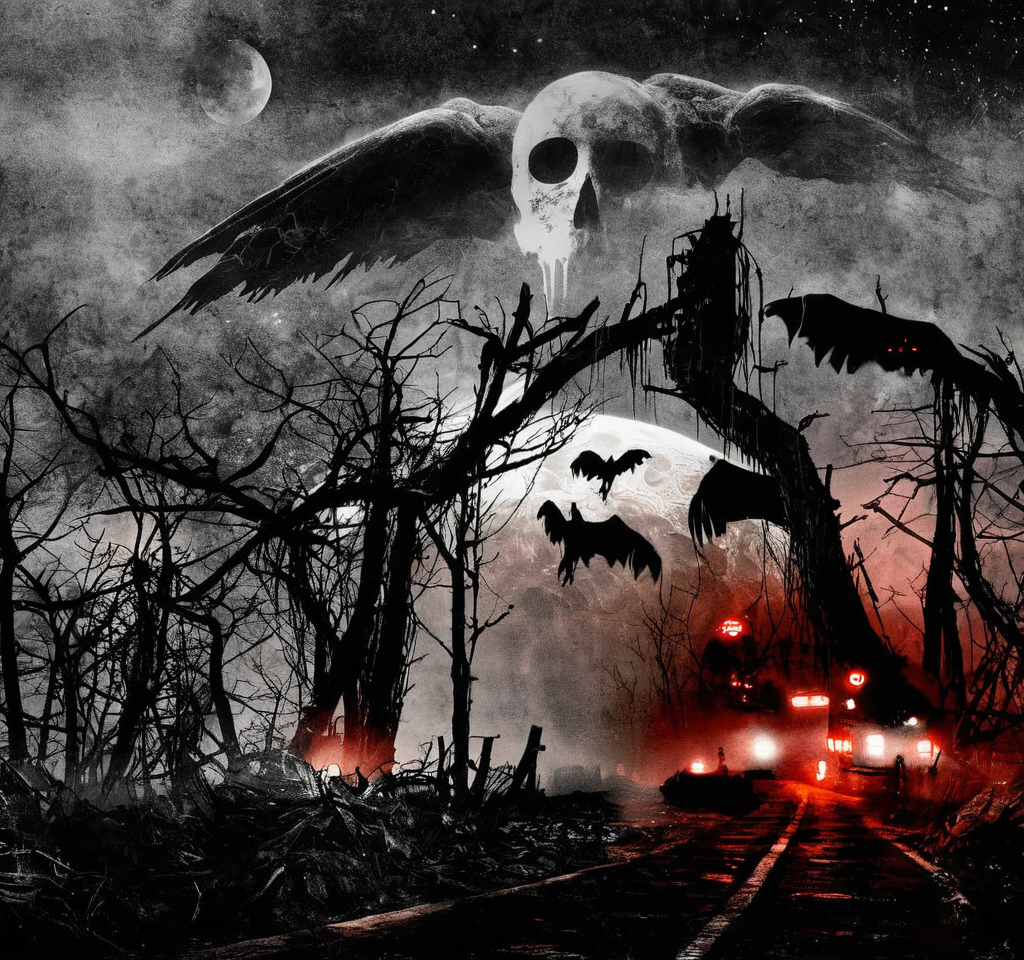
We are rapidly approaching the end of the year, the time when both humanity and nature are meant to pause and reflect. As early as the equinoxes (September 21), when the hours of daylight begin to shorten, we were reminded of the dark season to come. By October 31, the period of awakening brought on by the change of seasons is over. On the night of November 1, the gate to the realm of shadows opens, and we encounter those beings whom we, for practical reasons, banished to the realm of shadows—a realm once believed to be lifeless. We are now given the opportunity to confront these shadows—and what season is better suited for this than the dark one? We need not fear the darkness. The moods that arise during this time of reflection—by the light of a candle and accompanied by atmospheric, evocative music—prepare us to sketch out our first promising life goals and to reflect on old attachments (childhood imprints, karmic and familial influences, current political events, etc.) that have been perceived as obstacles to achieving personal spiritual growth or any other set goal—in order to begin the process of resolution—and here we recall shadow work.
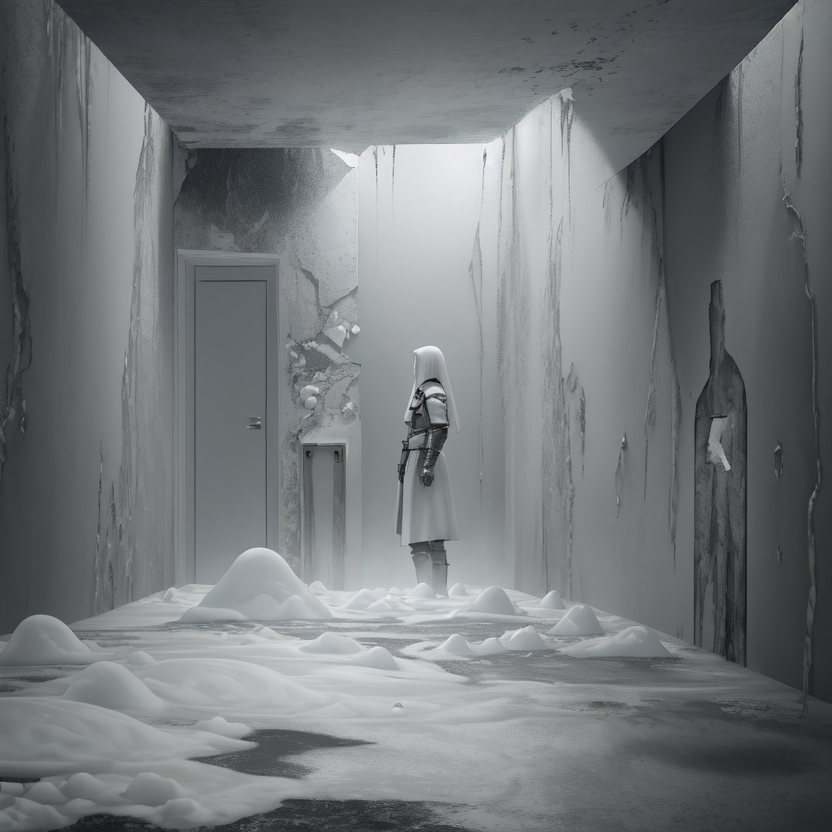
On the night of November 1, the gate to the realm of shadows opens, and we encounter those beings whom we, for practical reasons, banished to the realm of shadows—a realm once believed to be lifeless.
But as we reflect on all that we have worked on, set in motion, meditated upon, and ritualized, we reach a point where we realize that some of what we had set as a goal—or what seemed permanent—was subject to becoming and passing away.
Often, this is the moment when we begin to realize that everything we think or do in life—and everything that surrounds us daily—is “Memento Mori” (transient!). This is especially true when a loved one has passed away. Often, as we grieve for weeks on end, the pain plunges us—even to the point of nightmares—into a storm of surging, turbulent thoughts about whether we showed the deceased the appreciation and respect they deserved, despite any existing differences.
Modernity and Medicine – Death Is Being Ignored!
For generations, people have commemorated the dead. Whether it’s the Japanese celebrating the Obon Festival (a commemoration of ancestors) in August, or the Mexicans decorating graves and offering food and drink to the dead on November 1 and 2. In Switzerland and Germany, the dead are commemorated—in the Christian tradition—on the last Sunday in late November. Honoring the dead is thus a cross-cultural ritual that is, unfortunately, slowly fading away, especially in the Western hemisphere.
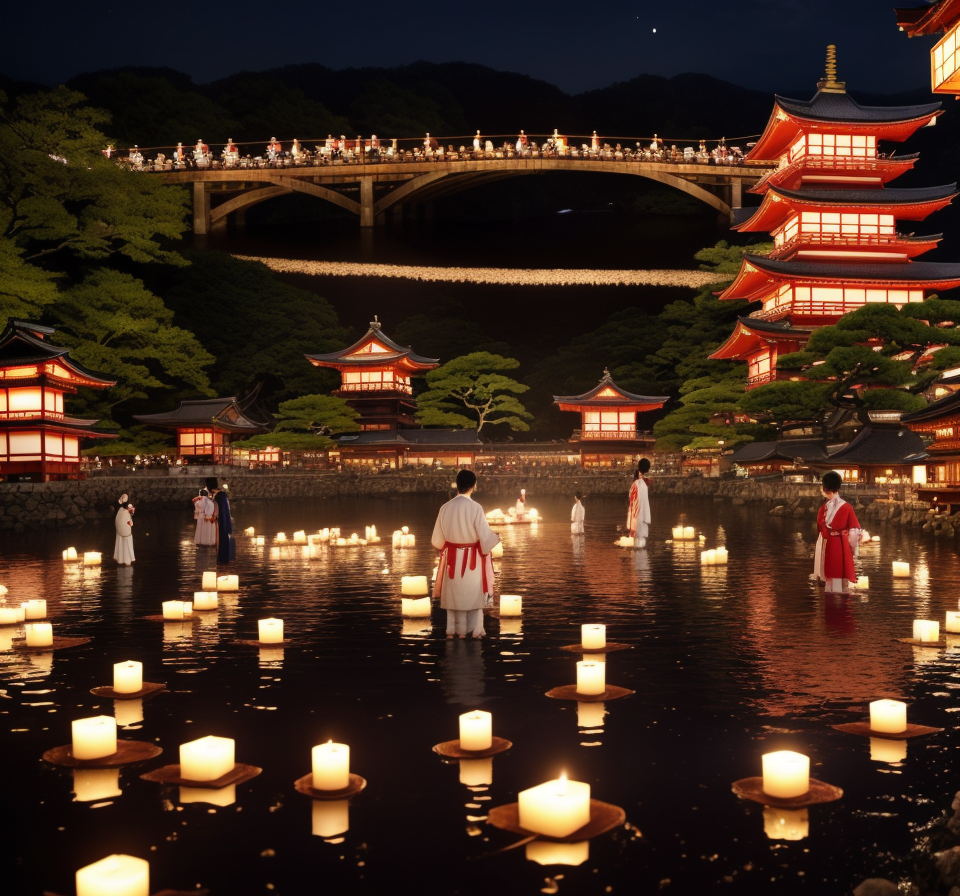
For generations, people have commemorated the dead. Whether it’s the Japanese celebrating the Obon festival (a commemoration of ancestors) in August, or the Mexicans decorating graves and offering food and drink to the dead on November 1 and 2.
It seems to us that this is primarily a problem of the modern age, for modernity views inevitable death as part of a multi-billion-dollar business model—gladly embraced by people—based on promises, surgeries, pills, creams, and injections, with industrially organized cosmetic surgeries at its forefront. Meanwhile, anyone observing an urban cemetery will note that, despite oh-so-advanced medicine and oh-so-modern lifestyles, human transience remains inexorably subject to the cycle of becoming and passing away (“Memento Mori”), a cycle that is currently accelerating. The suppression of the inevitability of death and the remembrance of the dead is evidenced by the decay of grave sites and mausoleums that once honored the dead, many of which are now hopelessly dilapidated.
Halloween
In modern times, the commemoration of the dead and ancestors has been repackaged as a commercially exploited, colorful spectacle called Halloween, which bears little resemblance to the deliberately suppressed traditions of honoring ancestors and the dead, yet still pursues a specific goal.
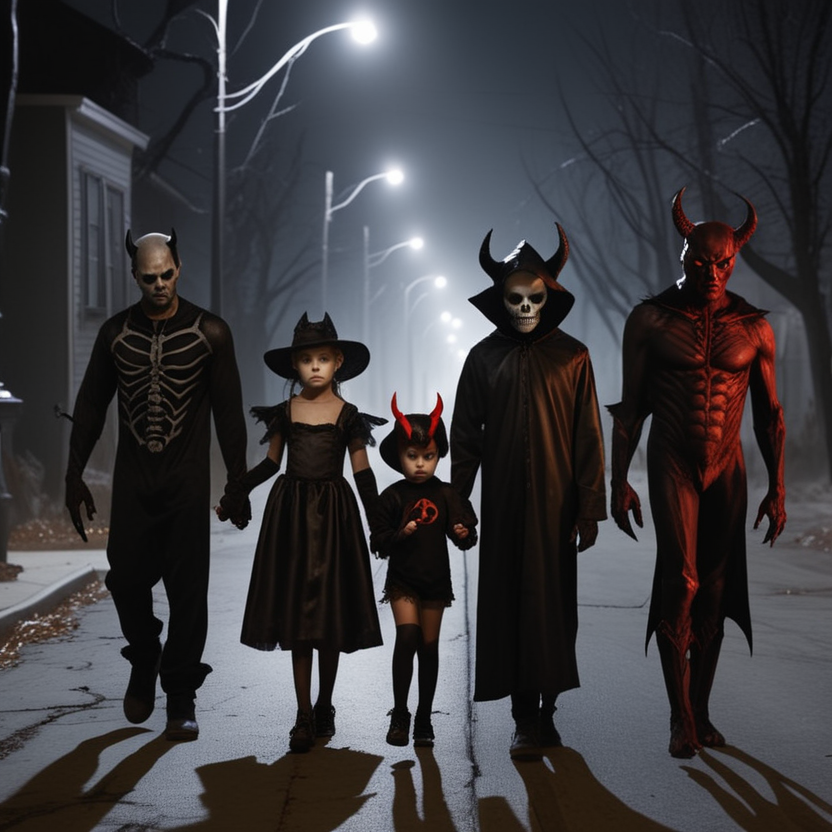
Tired of the pranks and the resulting economic damage, local authorities initially turned them into a festival of legalized mischief, which was then gradually transformed by the addition of spooky costumes—the spreading of terror!—
Around the 1930s, Halloween—imported to America by Irish, British, and Scottish immigrants—became established in the United States. The origins of American Halloween, far removed from traditional Irish or Scottish roots, were based on an uncoordinated series of sometimes malicious pranks (“Mischief Night”), mostly carried out by teenagers. Tired of the pranks and the resulting economic damage, local authorities initially transformed the tradition into a festival of legalized mischief, which was then gradually replaced by spooky costumes—the spreading of terror! Children were drawn into the spectacle; previously, they had organized themselves more independently to go door-to-door demanding “trick or treat” and coins. Candy manufacturers quickly recognized the enormous sales potential. Costume and accessory manufacturers followed suit. In 2025 alone, Americans spent approximately $8.8 billion on Halloween items (1). The website etailment.de-Magazin reported that sales of approximately €537 million are expected in Germany in 2026 (2).
The Perversion of Remembrance of the Dead Through Halloween
Modern life is fast-paced: Live fast, buy a lot, escape reality as often as you can through electronic devices, accept what you cannot change, and stop questioning things. Period!
Modern Halloween celebrations reveal a sophisticated plan for the diabolical takeover of the human soul. Even the costumes themselves express the diabolical, the evil, the depravity, and the brutalization of what were once ethical principles—even if Halloween seems to be nothing more than a crazy, silly spectacle that pushes the boundaries of good taste.
Modern Halloween celebrations reflect the diabolical plan to take over human souls.
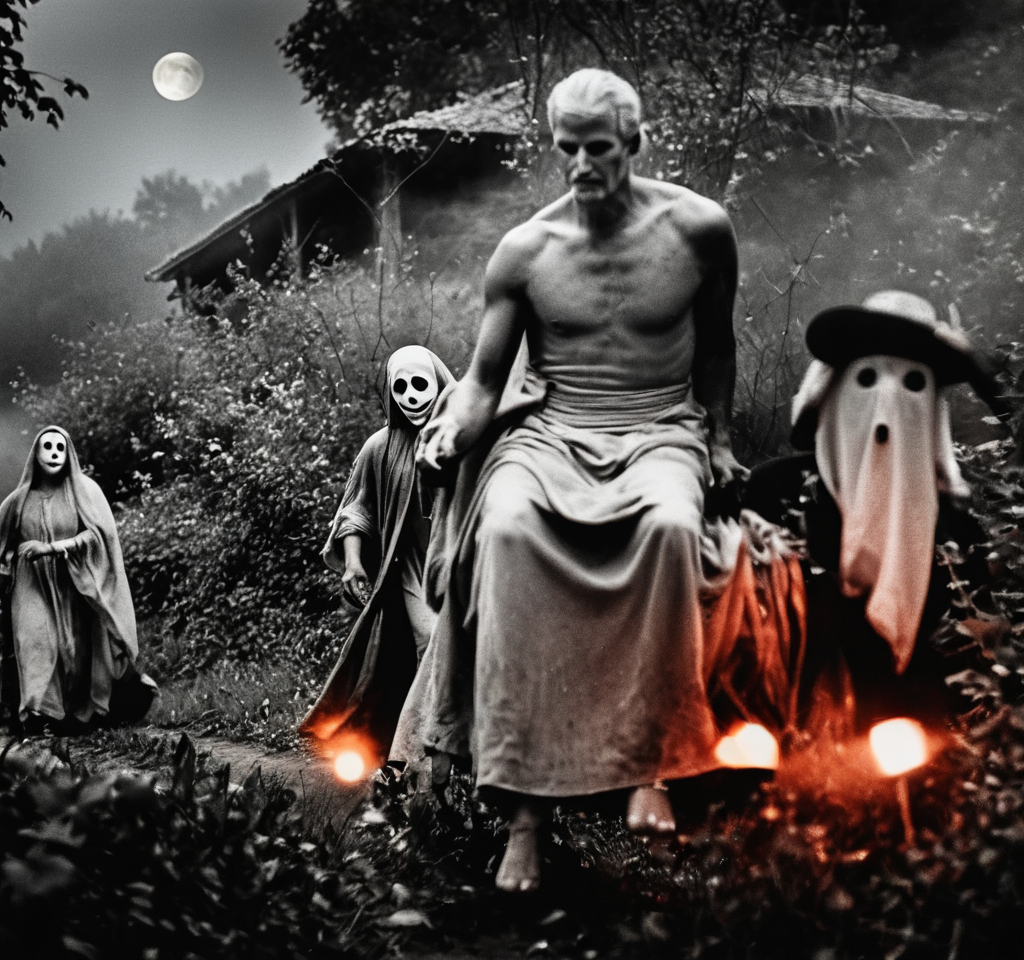
The diabolical context of today’s Halloween is unmistakable and represents a creeping reprogramming of the ethical principles once deeply rooted in people. So it’s no wonder that humanity is becoming brutalized and empathy is becoming a foreign concept. Halloween is merely one cog in the machine—that is, not the sole determining factor, but a deliberately orchestrated event that has already found its way, for better or worse, into the hearts of children.The Original Meaning of Remembrance of the Dead
The origins of the remembrance of the dead—as we understand it on the European continent—are rooted in Celtic rituals honoring the dead (Samhain). If we consider the seasons in this context, we see that this remembrance of the dead is linked to the end of summer, a season that fills life with vitality and joy. Fall is now upon us, and in often foggy, hushed scenes, it transforms the once-lush green into a musty, decaying state. Before winter approaches, the fields are prepared for spring sowing; the livestock returns to the barns—an autumnal stillness settles in, and it seems as though a frost-bearing shroud is draping itself over fields, meadows, and forests, as well as the villages nestled among them.
Samhain (“sam fuin” = “end of summer”)
On the night of October 31 to November 1, the gate to the world of the dead and spirits opens, according to the Celtic rite, which spread widely throughout the northern lands. Among others, the Greeks deviated from this commemoration of the dead, which originated in Celtic culture. Between February and March, the Greeks observed the Anthesteria festival, which lasted several days and was celebrated in honor of the god Dionysus amid boisterous wine-drinking revelry. As part of the festivities, the dead were ritually commemorated. However, unlike with the Celts, the festival was associated with the transition from winter to spring.
Viewing Ancestral Remembrance as a Karmic Reflection
Ancestors? Which ancestors? This question becomes: What is there to inherit? No value should be placed on traditions, for remembrance—which should always be a thoughtful reflection—hinders Moloch-like progress. Remembering the past means becoming aware that the present life is only a small stage on the journey through the spheres of incarnation. The goal of life should be to remember who one is, what one is, and where one is going.
Remembering one’s ancestors is part of the spiritual cycle of becoming and passing away. It is part of the karmic journeys of human beings as they evolve from one journey to the next. These journeys of the spiritual being are necessary in order to ultimately return to the creative-spiritual source.
Most modern people find it difficult to relate to the commemoration of ancestors. Ideologically—that is, on the materialistic and officially religious levels—the practice of commemorating the dead has been (almost) completely eradicated from people’s lives. On the materialistic level, it is posited that a person lives only once and that this time should be filled with the accumulation of material goods. On the religious level—we are referring here to Christianity—the motto was “Ora et labora” (Pray and work) until death overtakes you; then you become “ash to ash—dust to dust,” and go to heaven or hell. However: The soul’s capacity for recollection (provided that the person is, in a spiritual sense, considered “awakened”) can neither be corrupted nor manipulated—neither by the Moloch-like “wisdom” published daily nor by the intellectual outpourings of modern science, which are permeated by the diabolical (money) spirit!
Behind the remembrance of ancestors—as we understand it, incorporating spiritual aspects—lies more than just the memory of times past or even of the deceased who, during their lifetimes, harmed others or drove generations to ruin or death.
Ancestral remembrance is part of the spiritual cycle of becoming and passing away. It is part of the karmic journeys of the human being, who evolves from one journey to the next. These journeys of the spiritual being are necessary in order to ultimately return to the creative-spiritual source. In this context, it must be emphasized that ancestral remembrance always refers only to the present incarnation, which is why it cannot be linked to other incarnations. This is because in previous incarnations, tasks and insights had to be addressed that were connected to the ancestors and the respective social conditions.
Closing Remarks
Light a candle at the grave of your deceased ancestor and reflect on both the positive and the less pleasant moments you shared with them. From all the thoughts that arise (not at the grave), identify the factors that require in-depth analysis—that is, an assessment of their value, their usefulness, and what served as the cause of conflict or the source of joyful moments, etc.—in order to extract a prominent positive element for your spiritual development—including from social conflicts.
At the end of these reflections, remain aware that the “Memento Mori” is drawing ever closer for you as well. Yet, knowing that you have fulfilled the tasks associated with this incarnation, your soul will joyfully look forward to the next incarnation on Earth.
(1): https://www.nzz.ch/panorama/halloween-ist-in-den-usa-ein-riesiges-geschaeft-ld.1518627
(2): https://etailment.de/magazin/2026-10-21-weniger-kaeufer-mehr-umsatz-halloween-legt-zu
(©) 2026 by signs-of-wisdom.com (Team SoW). All rights reserved!