Carnival – Is it all over on Aschermittwoch (1)?

There are many theories as to how and why Carnival (also known as Fasnet, Fasching, and in a broader sense also Masked Ball or Masquerade) is or was celebrated as a recurring annual event with different country-specific content and dates.
According to a book by G. Anrich published in 1913, “Der heilige Nikolaus in der griechischen Kirche” (St. Nicholas in the Greek Church), the word Fastnacht is said to have been coined by the Bishop of Myra (ca. 350 AD). This statement – like most of the Christian-ideologized chroniclers – should be viewed with caution, because the Romans incorporated Shrove Tuesday-specific activities into the Saturnalia (celebrations in honor of the god Saturn), e.g., the reversal of values: slaves were served by their masters, and the lowly were symbolically crowned rulers.
Today, the days of carnival appear to us as a spectacle of “restrained escape” from the constraints of modernity and its limitations that control the mind and will, expressed in exuberance and folly and the frequent abandonment of all civilizational barriers: a kind of stunted Commedia dell ‘Arte (originally humorous folk theater) compressed into a period of time, in graded forms that define a framework set by political and ideological influences: The common folk may be exuberant, even voluptuous, even tactical in the “decided” mockery and scorn of the carnival speeches directed at the singing and swaying authorities—and all are united by the intoxication of folly.
Today, we see the days of carnival as a spectacle of “restrained escape” from the constraints of modernity and its restrictions on the mind and will, expressed in exuberance and folly and the frequent abandonment of all civilizational barriers.
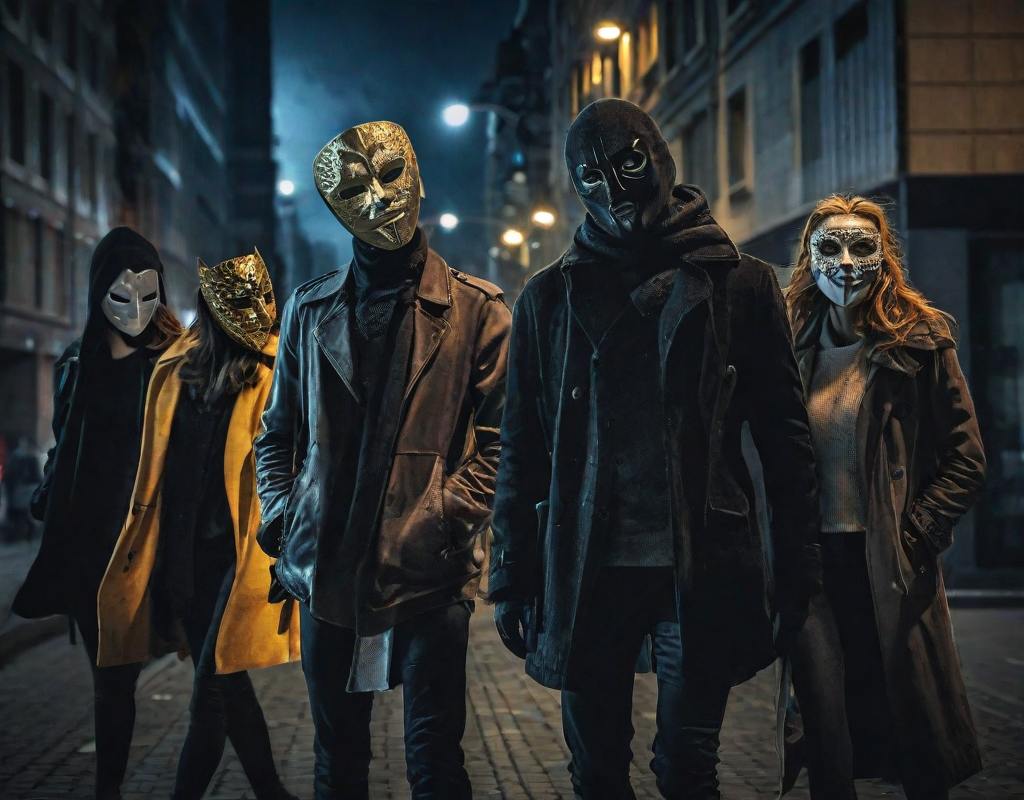
Most carnival revelers today are unaware that the word “Fastnacht” (carnival) contains the word “fasten” (fast), or they ignore this fact. The possible origin of this custom is linked to the end of the Christmas celebrations, which is why the carnival season was still dated between December 26 and Epiphany in the 19th century—after which fasting began.
At the end of the Christmas season, we once again encounter the ominous fire wheel (the wheel as a representation of the sun), which was wrapped in dry straw, tied up, and set alight on the hilltop so that the burning wheel rolling down the mountain would strike the carnival sparks that drive away the spirits and demons of winter and summon those of growth and prosperity (springtime). Noise and masquerade contributed to the success of the fire wheel ritual.
If we associate traditional ritual-based and modern carnival activities with dressing up and slipping into the identity of another person – or an animal – we come close to the meaning of carnival, because: Dressing up and wearing masks, as part of the ritual of disguise and identity change that originated in traditional spiritual rituals, is not identical to today’s carnival celebrations, but is reminiscent of the ritual actions of shamans, medicine men, magicians, witches, hunters, warriors, etc., who wore clothing that supported the ritual act, which sometimes included wearing masks.
Carnival – The spiritual meaning
In ancient times, when people still sought to establish direct and constant contact with creation in order to, among other things, for the changing of the seasons, for fruitful hunts and harvests, or for protection for the tribe or clan, the most spiritual members of the folk or clan society performed spiritual rituals to give their requests greater expression and power of realization: The shaman, medicine man, or priest dressed in his conception of the god he sought to address: the sun god was invoked wearing a gold mask, the god of the hunt wearing a deer head, the masks worn by tribal warriors, body and face paintings representing the god of war, other fearsome masks representing the god who drives away demons, etc. Even today, in some areas of Europe (including Basel Carnival and parts of Swabia and Bavaria, etc.), demonic masks or animal masks are used during the carnival season, less to drive out the demons of winter and more just for fun.
Masking, the ritualistic adoption of the physical appearance and character of another person, animal, or demonic or devilish entity, has been an expression of communication with higher elements associated with spiritual planes since the dawn of time.
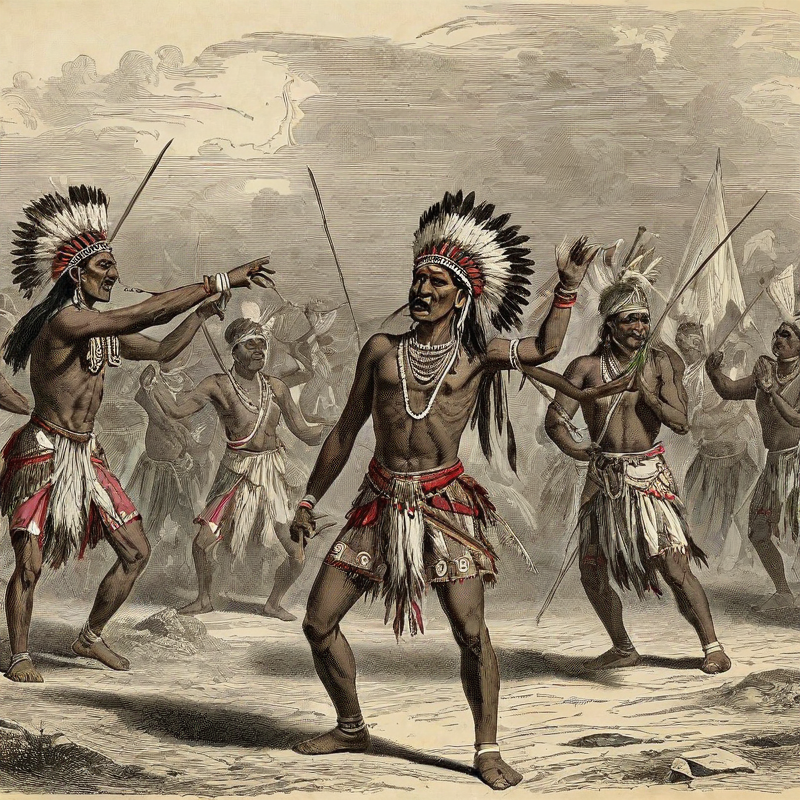
Many of the ritual invocations are still performed effectively today, mainly in traditional indigenous structures. These rituals have a global influence and resonance and are capable of keeping in check or neutralizing the energy fields of the modern world that have a negative impact on humans and nature.
Many of the aforementioned ritualistic invocations are still practiced effectively today, mainly in traditional indigenous structures. These rituals have a global influence and resonance and are capable of keeping in check or neutralizing the energy fields of the modern world that have a negative effect on humans and nature. This may be one of the reasons why modernity always tries to eradicate traditional values (rituals).
In today’s world, outside of traditional social structures, ancient rituals hardly play a role in the modern, materialistic world, or are merely a visual or verbal spectacle of essentially misunderstood or incomprehensible invocations of higher powers for specific purposes.
Take away people’s masks, and they are naked!
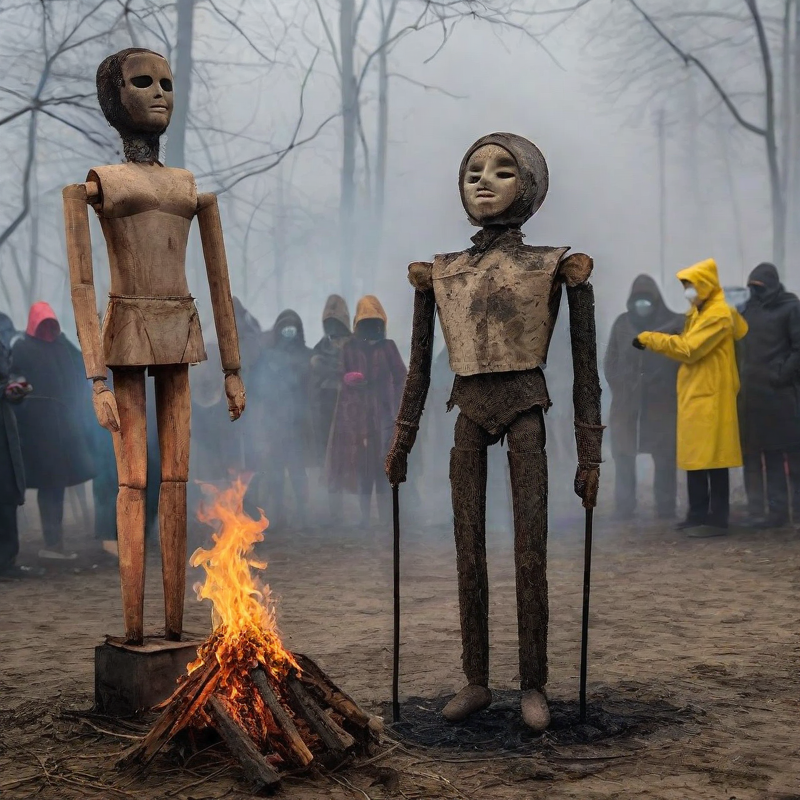
Whereas in the traditionally structured world it was essentially shamans, priests, wise women, or medicine men who were the bearers of rituals and masks, today they are an expression of exuberant, childish, foolish behavior, which in the modern concept of carnival creates the space to escape the materially organized world for a few days. It has been forgotten that the foolishness expressed in carnival today was once a reversal of a ritual performed in all seriousness in order to derive spiritual benefit or protection for the clan.
Nevertheless, especially in today’s world, masquerades, which are not only performed during carnival season, are a visible reflection of human nature, even if they can be defined as an escape from reality. The mask shows the person who wants to be, or shows the suppressed aspect of what they could be. Furthermore, masquerades (even those without masks!) give power over other people or groups and convey the feeling associated with power of being something special (belonging to the elite): Consider the ‘judge’ in his black (expressing dark energy) or red (demonic) masquerade, the bishops living in abundance dressed in their expensive purple robes, the policeman or soldier in his uniform that enhances his status as a person, the politicians in the realm of official cars, “allowances,” and other privileges, the foreman in his blue smock in his small office, the man dressed in smart clothes in his chic office, or the individuals in the offices and government agencies craving recognition in their “upscale” off-the-rack clothes—tear off their masks, and they are naked.
Modernity, for its own sake, corrupts the spiritual memories and perceptions inherent in human beings, which are connected to the demand placed on the peoples of the earth to recognize spiritual principles and ways of acting in order to shape and live them for the good of humanity.
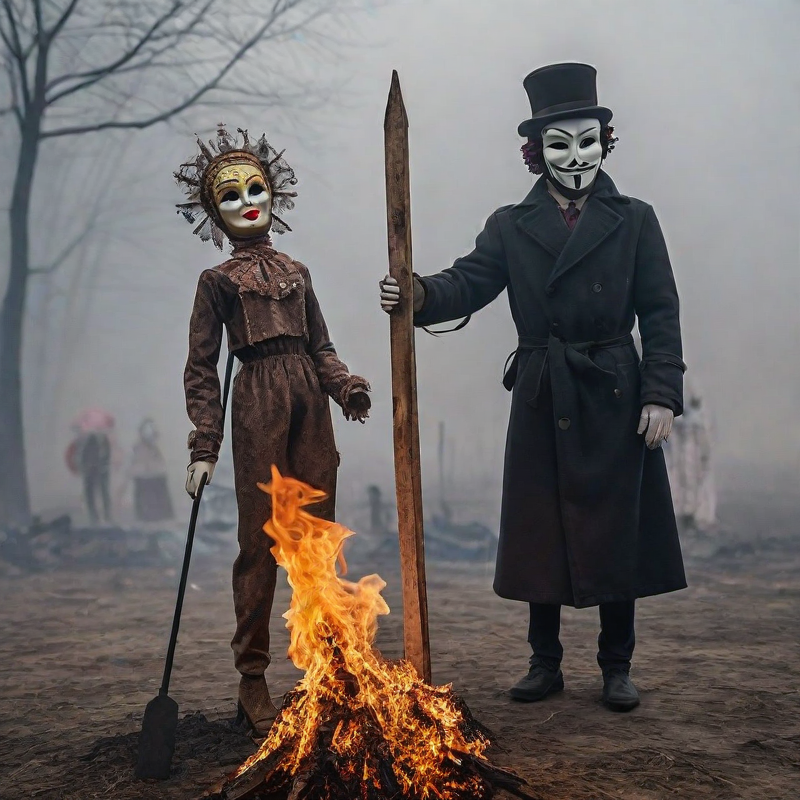
On Aschermittwoch (1), it’s all over, people say, forgetting that traditionally on this Wednesday, the carnival dolls made shortly before carnival were burned or buried.
On Ash Wednesday, everything is over, people say, forgetting that traditionally on this Wednesday, the carnival dolls made shortly before Shrove Tuesday were burned or buried, which symbolized the removal and destruction of the masks worn during the carnival season and ensured a return to the self. This ritual no longer resonates in its original sense, or is now only a funny-looking, alcohol-soaked imitation of the ritual. It is therefore not surprising that the masks and personifications that have been adopted (including those put on and adopted outside the carnival season) sometimes wreak havoc with the self that once was, causing confusion and error, which significantly limits orientation and insight on the path of life and blocks access to spirituality.
(1) In German-speaking countries, Aschermittwoch is the first Wednesday after the carnival season.
© 2026 by (Team) SoW – All Rights reserved