The Mystery of the Sakkara Serapeum (Apis Bull Sanctuary) in the Context of the Modern Era (Part 2)
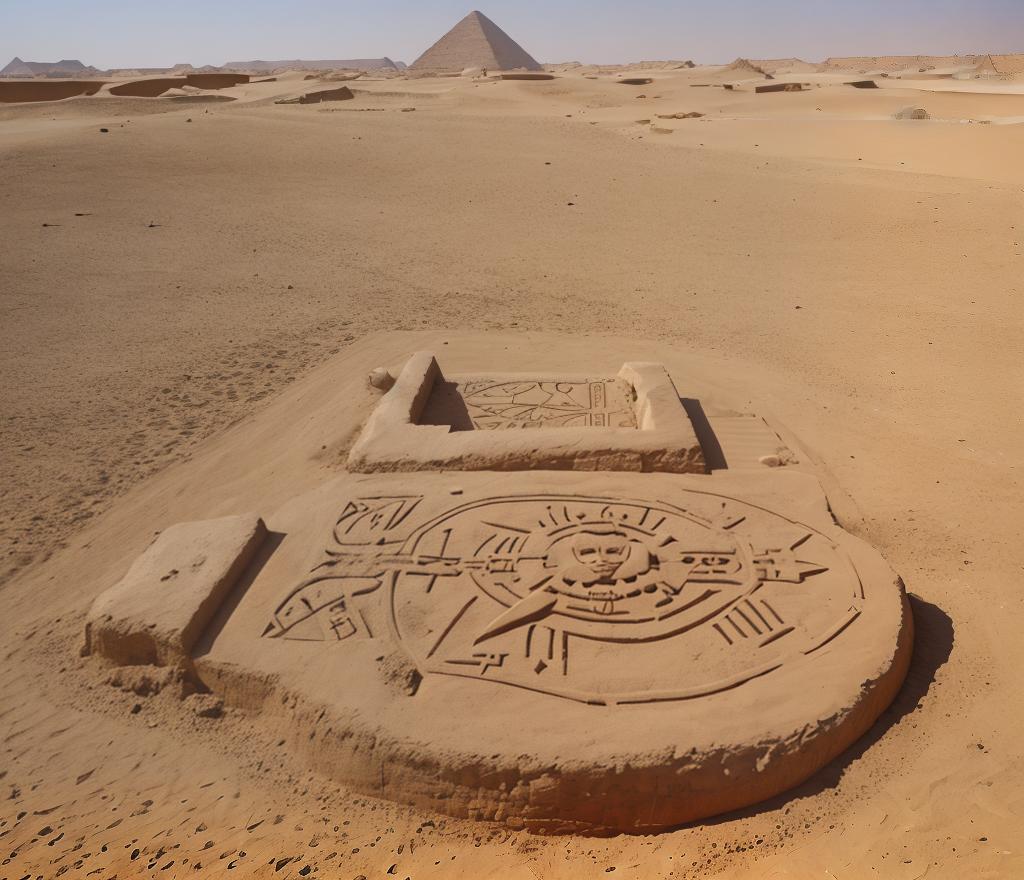
Spiritual Interpretation of the Cult of Apis
To summarize: Apis, the bull god, was worshipped in Memphis; in Heliopolis, it was the bull god Mnevis; and both were worshipped in the land now known as Egypt.
We have discussed the negative power of the bull in relation to worldly events and influences in various blog articles. Nevertheless, we would like to emphasize that the energy of the bull can also be positive when it was incorporated into ritual practices—as, for example, by the (supposedly) Egyptian priesthood—and always took into account the entire symbolic language of the original Apis cult.
While Apis was regarded in ancient Egypt as a god of fertility, strength, and so on, the symbolism and rituals of Apis worship underwent a fundamental transformation as the priesthood’s influence grew on the one hand and the secular rulers associated with it on the other. In other words, the Apis cult was detached from its original spiritual context to adopt a deliberately engineered, materialistic form of expression and influence—one derived from the physical strength of the bull and successively extended to power dynamics, the accumulation of wealth, and a dominant influence on social and spiritual developments.
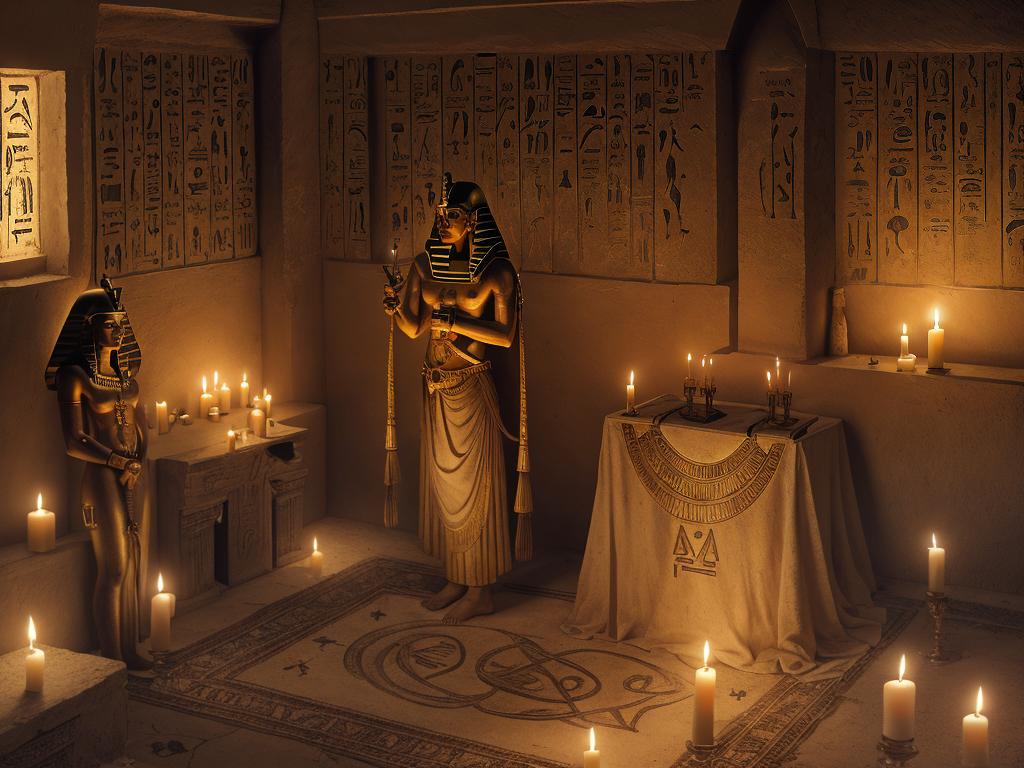
While Apis was regarded in ancient Egypt as the god of fertility, strength, and so on, the symbolism and rituals of worship associated with Apis underwent a fundamental transformation as the influence of the priesthood on the one hand and the secular rulers allied with it on the other grew.
Let’s take a closer look at the images of the Apis bull available to us in order to understand the symbolism associated with the Apis cult: Apis has a massive body and strongly pronounced horns, between which a golden disk was placed; this initially symbolized both the Logos and the influence of the sun, and later—as the Apis cult evolved—that of gold. In front of the disk was positioned an upright snake, representing spiritual wisdom; in later periods, it came to be regarded as a symbol of venerating the wealth (gold) represented by the golden disk and—consequently—defending it by any means necessary. In the bulls placed today in front of stock exchanges around the world, the original symbolism of the disk has been removed, for otherwise the connection to the ancient Egyptian occult Apis cult would be too obvious.
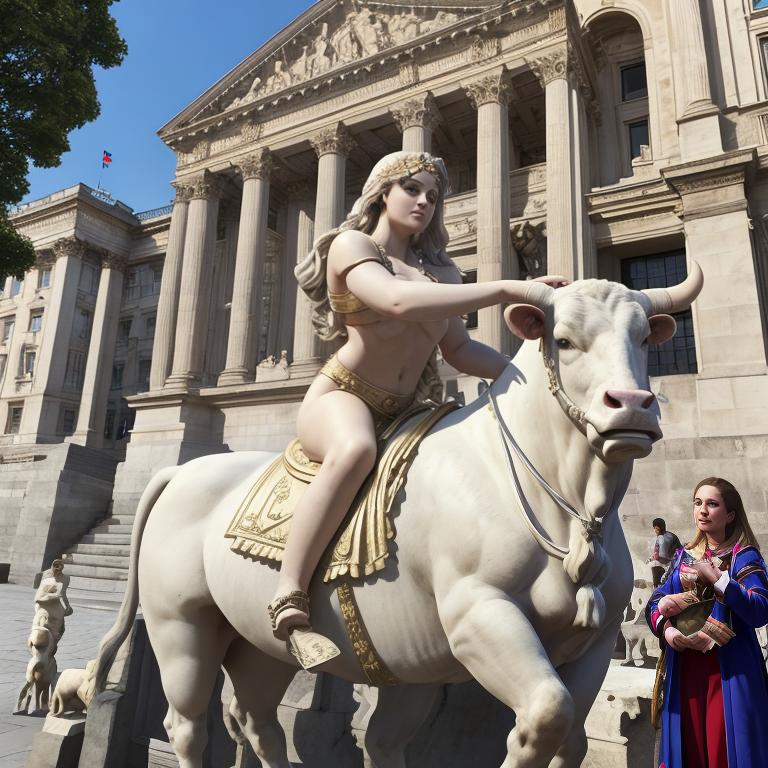
The aspects outlined above allow for a meaningful spiritual interpretation; furthermore, it can be deduced from them that the Bull-Paris cult currently celebrated by those in power, in its negative manifestation, is heading toward a climax preceding its imminent downfall: Paris abducted the beautiful Helen, or rather, the goddess Europa (a synonym for Helen) subjugated him, which explains the negative economic and ethical-moral decline of the Western-oriented confederation of states that is visible today.
Paris abducted the beautiful Helen, or rather, the goddess Europa—a synonym for Helen—submitted to him, which explains the economic and ethical-moral decline of the Western-oriented alliance of states that is evident today.
The 24 Granite Vessels in the Saqqara Sanctuary
There is much speculation regarding the creation of the 24 granite containers. Whether they were created, as some claim, by supposed extraterrestrials or by humans is irrelevant at this point. What can be stated with certainty is that the construction, as well as the transport and positioning of the granite boxes in the niches discovered by Mariette, was not the work of the Egyptians.
The 24 granite containers—one of which was never placed in a niche, having stood untouched for eons in a passage carved into the rock—indicate that they were intended for 24 Apis bulls. The bull carcasses cannot have been the ones intended, as these were buried in simply designed wooden coffins, and it remains unknown to this day how many mummified bulls Mariette found.
If not the bull carcasses, what else could have been placed in the granite containers in the context of the mummified Apis bulls? Only one factor remains: the spiritual one! From this, we can deduce that spiritual forces enclosed the negative energetic manifestations of the bull souls within the granite containers. This line of reasoning may seem far-fetched to the rational mind, yet we would like to point out that we and our surroundings are energy, so that—provided one has the knowledge and ability to do so—the soul can be captured, influenced, or corrupted. In his book The Serpent and the Rainbow, E. Wade Davis described the practices of voodoo priests who ritually influence the deceased—already lying in coffins underground—to resurrect them as zombies—as servants of the voodoo priest. In modern times, the Moloch-like elite and their narrow-minded henchmen make use of psychology, the media, medicine, or a line of thought and action subliminally imposed on society, which the masses follow in a zombie-like manner.
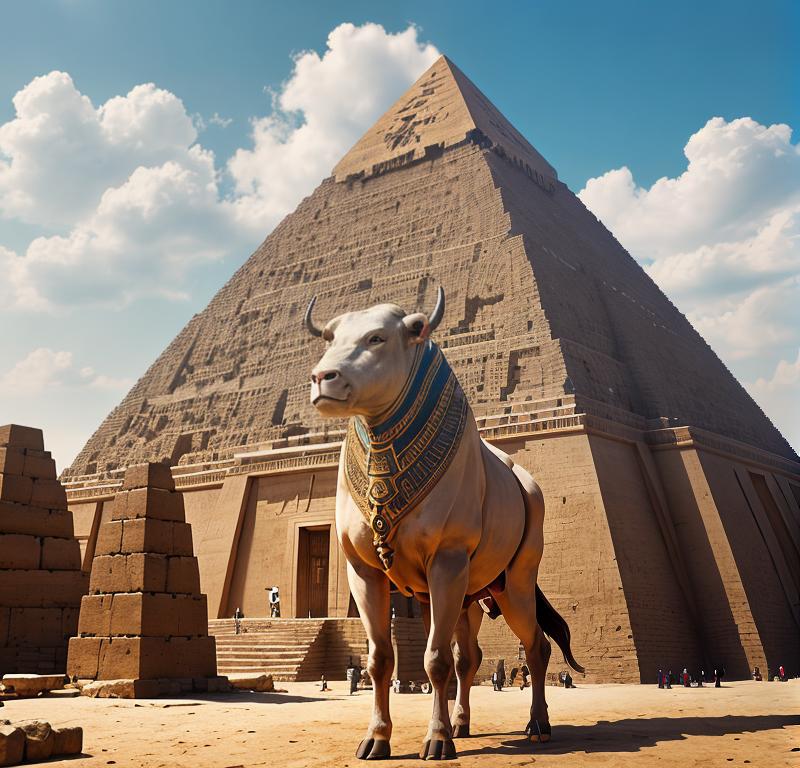
Apis, the bull god, was worshiped in Memphis, and Mnevis, the bull god, was worshiped in Heliopolis, by people in the land now known as Egypt.
According to Mariette, tomb robbers—though this seems rather unlikely—broke open the granite containers; that is, they manually pushed aside the granite box lids, which weighed up to 30 metric tons, by torchlight, in narrow niches with little room to maneuver?!
Ultimately, it doesn’t matter who opened the once-sealed granite containers. What matters is that the contained bull energy was released and that some of the bull carcasses discovered by Mariette disappeared into ritual chambers serving Moloch and promoting him through occult practices. The negative effects of the released Apis-Paris-Moloch energy have penetrated deeply into all areas of modern life, transforming them in the spirit of Paris-Moloch.
Some Evidence
Ever since the ancient Egyptian world—with its mysterious pyramids and tombs, its occult magic and associated rituals —insofar as these could be deciphered through hieroglyphs—and the prospect of as-yet-undiscovered, immeasurably valuable artifacts became accessible to the leading powers of the Western world in the 17th and 18th centuries, Masonic and occult societies and associations followed in their wake to inspect the Egyptian places of worship mentioned in ancient occult tomes. For Freemasons and occultists, the primary goal was not so much to lay claim to the riches buried and locked away in Egyptian soil—though this was certainly welcomed as a pleasant side effect. The goal was to appropriate what appeared to be Egyptian occultism in order to create a kind of Egyptian world for Western countries—one that would likewise be based on hierarchies and integrated into the occult rites of the numinous world of the Egyptians.
Even today, rituals modeled after well-known Egyptian rituals are performed in some prominent Masonic and occult temples. And so it should come as no surprise that the doors of the Egyptian pyramids are still kept open for Freemasons and occultists, even when they are inaccessible to the general public or closed to visitors.
Freemasons and occultists still perform rituals in the Great Pyramid of Giza today.
Sources and Further Reading:
Le Sérapeum De Memphis, Auguste Mariette-Pacha, Paris (F. Vieweg, Libraire-Éditeur), 1882
The Serpent and the Rainbow, E. Wade Davis, Simon & Schuster, New York, 1985
Aleister Crowley das Grosse Tier 666. Leben und Magick, Marcus M. Jungkurth Michael D. Eschner, Verlag Kersken-Canbaz, Uelzen, 1982
Tempelschlaf, Gabriele Quinque, Einblick-Verlag, Frankfurt/M., 1993